
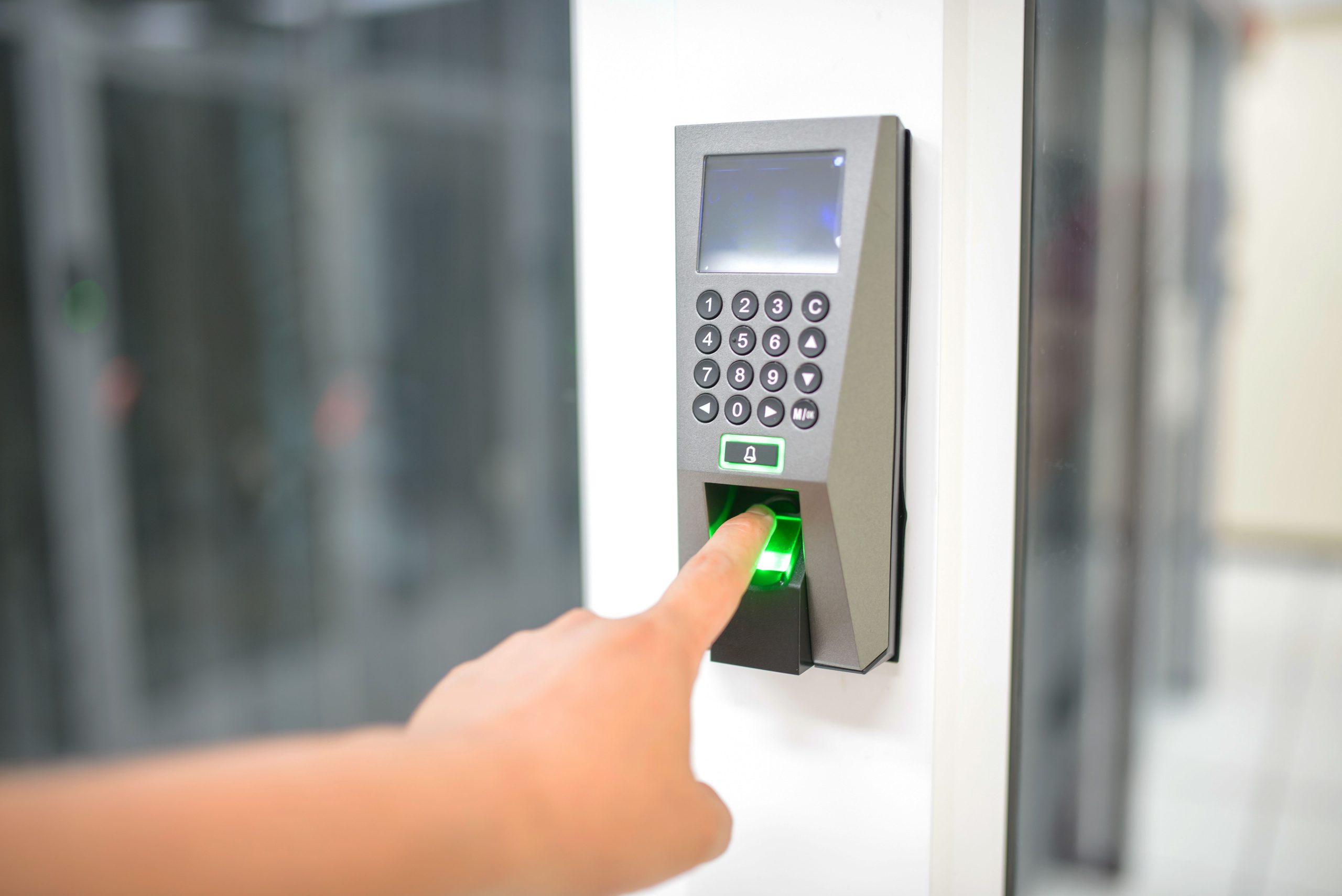
If you are wondering what biometric access control is, the answer is straightforward: it is an advanced security system that grants entry to a facility based on a person’s unique physical characteristics, such as their fingerprint, facial structure, or iris, rather than a physical key or keycard. By moving from “what you have” (a card) to “who you are” (your biology), biometric access control represents the highest standard of commercial building security available today.
As we move through 2026 and look toward 2027, the demand for highly secure, frictionless entry is rapidly increasing across Kitchener-Waterloo, Cambridge, and Guelph. Whether you manage a hospital, a pharmaceutical lab, or a corporate data centre, integrating access control and biometrics ensures that your restricted areas remain impenetrable to unauthorized personnel.
Table of Contents
What is Biometric Access Control?
Traditional security relies on credentials that can be lost, stolen, or shared. A staff member might hand their access fob to a coworker, creating a blind spot in your security audit trail. Biometric systems eliminate this vulnerability completely.
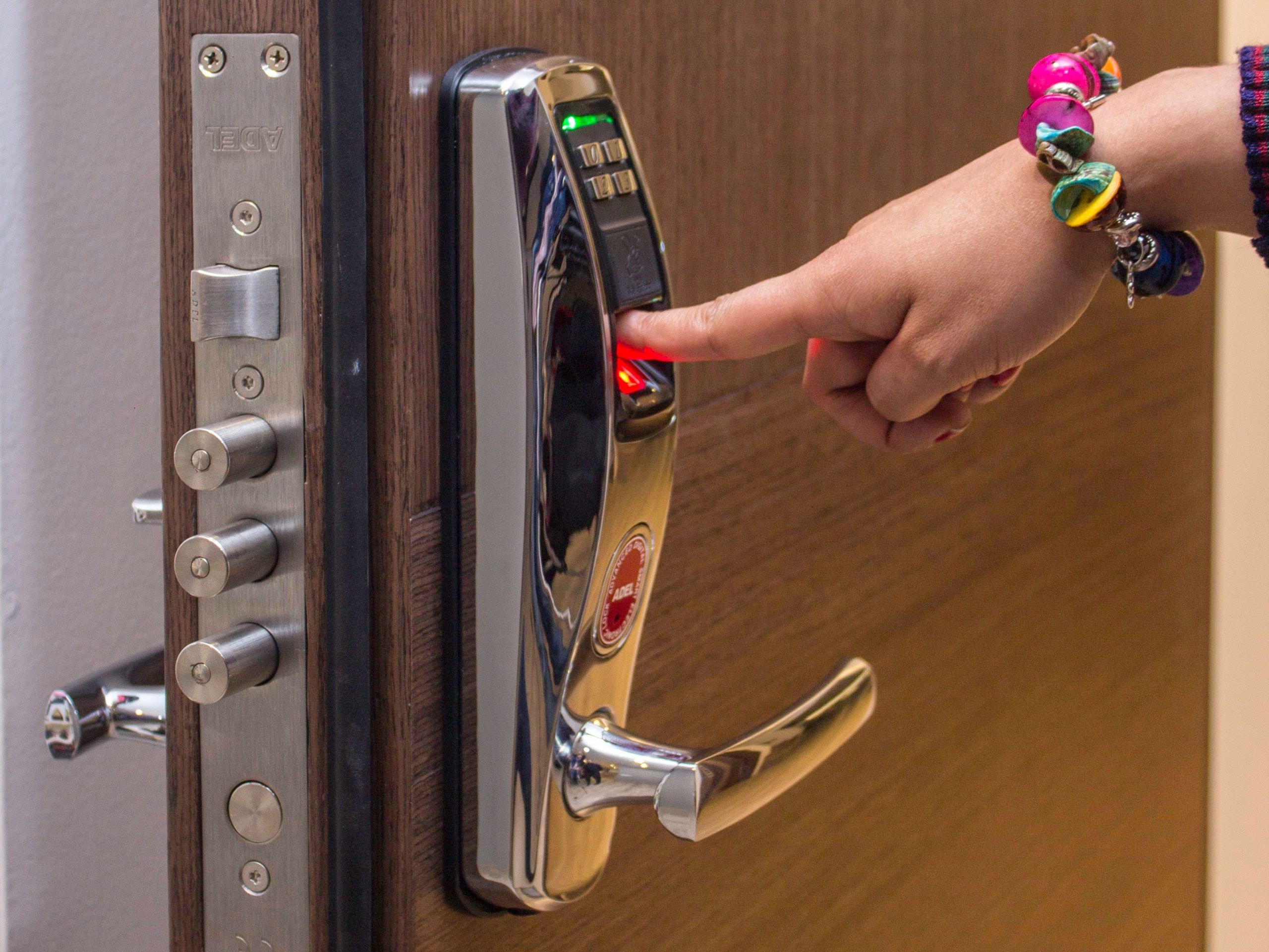
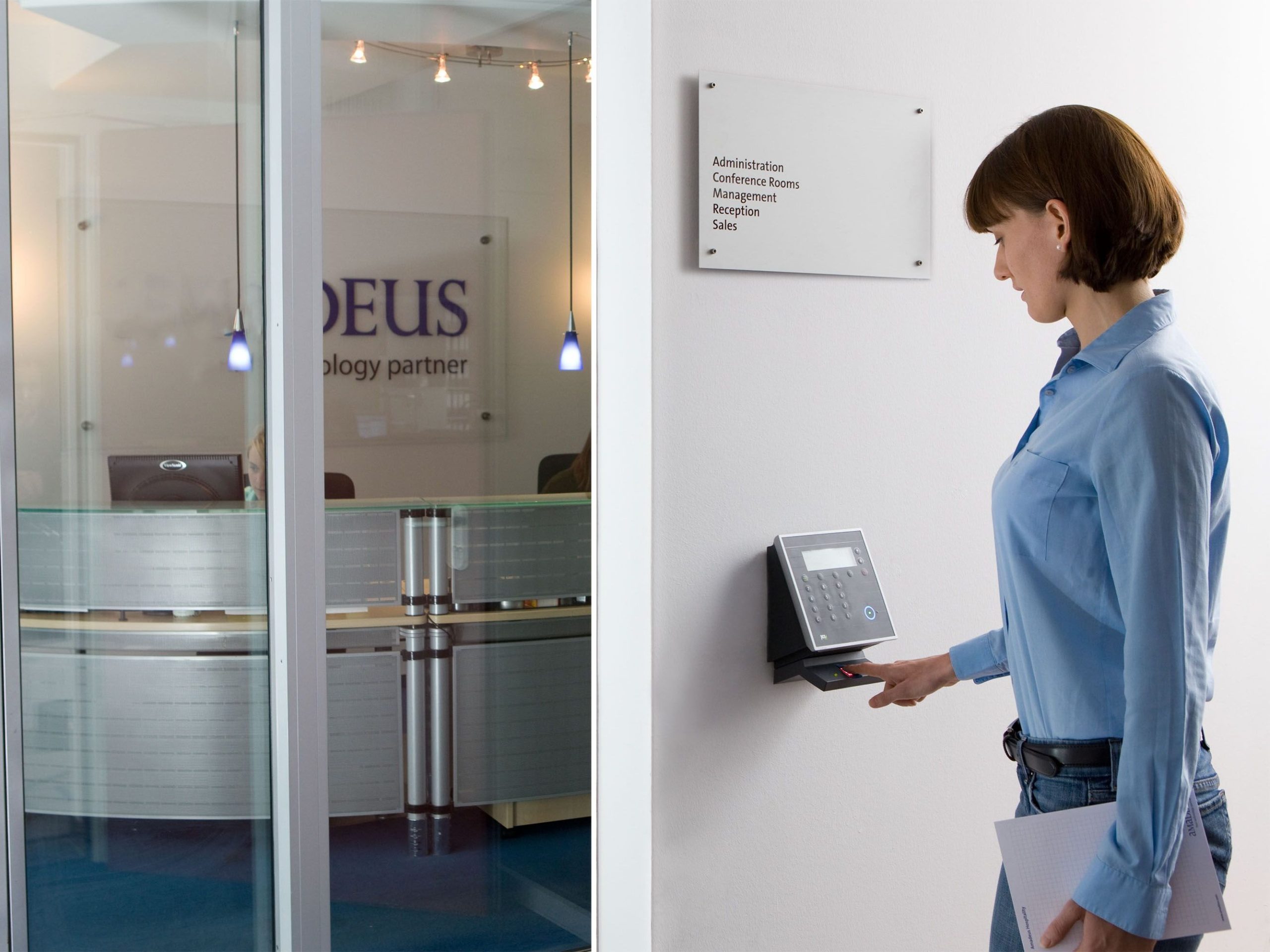
When a user approaches a biometric lock or reader, the system scans their physical trait, converts it into an encrypted digital template, and matches it against an authorized database in milliseconds. If there is a match, the electronic strike releases, and the door opens. At Knell’s, we integrate these advanced readers directly into your commercial access control systems, creating a unified, highly secure perimeter.
Types of Biometric Access Control
In 2026, commercial facilities will have several reliable types of biometric access control to choose from, depending on their security needs and traffic flow:
- Facial Recognition (Touchless): The fastest-growing trend in 2026/2027. Dual-lens cameras map the geometry of a user’s face, allowing for frictionless, walk-through access without the user ever needing to slow down or touch a surface.
- Fingerprint Scanners: The most common and cost-effective biometric solution. Users simply place their finger on a capacitive or optical reader. These are highly effective for interior server rooms or executive suites.
- Iris and Retina Scanners: Reserved for ultra-high-security environments, such as research labs or government facilities. These scan the unique patterns in the eye and are virtually impossible to spoof.
- Multi-Factor Biometrics: Combining a biometric scan with a PIN code or a smartphone credential for dual-layer authentication.
Biometric vs. Fobs and Smartphone Access Control
How does biology compare to traditional plastic fobs or modern mobile credentials? When evaluating biometric, fob, and smartphone access control, facility managers should weigh convenience against maximum security.
| Credential Type | Security Level | Convenience | Risk of Theft or Sharing | Best Use Case |
| Traditional Fobs or Cards | Moderate | High | High (easily passed to others) | General office doors, low-risk perimeters |
| Smartphone Access (Mobile) | High | Very High | Low (phones are rarely shared) | Employee entrances, parking gates |
| Biometric Access Control | Maximum | High (Touchless is very high) | Zero (cannot be shared) | Server rooms, pharmaceutical storage, executive suites |
Many modern facilities utilize a hybrid approach. For example, using the Genetec or Salto platforms, a hospital might allow smartphone access at the main employee entrance but require a fingerprint or facial scan to enter the pharmacy.
Biometric Access Control Safety & Privacy
A common question from HR departments and facility managers concerns biometric access control, safety, and employee privacy. Are we storing pictures of our employees’ faces or fingerprints?
The answer is no. Modern, enterprise-grade biometric systems do not store actual images of fingerprints or faces. Instead, the hardware measures the distances between specific points (such as the ridges of a finger or the bridge of a nose) and converts that data into an encrypted mathematical hash.
Even if a cybercriminal were to breach the database, they would only find strings of random numbers, not usable biological images. Furthermore, advanced readers now feature liveness detection, enabling them to distinguish a real human face from a high-resolution photograph or 3D mask, thereby preventing spoofing attempts.
Cost of Biometric Access Control Systems in 2026/2027
Biometric access control systems have become much more affordable for mid-sized businesses, though they remain a premium upgrade compared to standard card readers.
When budgeting for 2026/2027, facility managers should anticipate the following:
- Hardware Costs: A commercial-grade biometric reader (facial or fingerprint) typically ranges from $1,000 to $3,500+ CAD per door, depending on the technology and weather rating for exterior use.
- Software and Licensing: Integrating biometrics into a unified platform such as Genetec may require specific software module licences or cloud subscription fees.
- Infrastructure: Biometric readers process significant data and require robust cabling (often Power over Ethernet, or PoE) and secure electronic locking hardware at the door.
While the initial investment is higher, organizations often save money over the long term by eliminating the recurring costs of printing ID badges and replacing lost physical fobs.
Expert Biometric Access Control System Installation
Achieving the full benefits of biometrics requires flawless execution. A high-end facial recognition scanner is ineffective if the physical door frame is weak or the electric strike is improperly aligned.
Because Knell’s operates with a “Total Opening” philosophy, our biometric access control system installation covers everything from the structural door hardware to the software integration.
Building on our 119-year heritage and the specialized technical expertise of our Security Integration team (formerly G&A Lock Services), we ensure your system works in perfect harmony.
Our technicians serve institutional and industrial clients across Kitchener, Waterloo, Cambridge, Guelph, and the broader Southwestern Ontario region.
Who We Work With: Proven Regional Experience
Whether you build it, own it, manage it, maintain it, or repair it, Knell’s Security Integration works closely with organizations across Southwestern Ontario to deliver tailored security and access solutions. We collaborate with architects, general contractors, facility managers, and business owners across a wide spectrum of sectors:
- Healthcare and Long-Term Care: Hospitals, retirement communities, and assisted living facilities where patient safety, medicine storage, and strict access governance are essential.
- Academic and Public Institutions: Universities, colleges, school boards, and community facilities, balancing open campus environments with secure research wings and staff areas.
- Manufacturing and Industrial Facilities: Production plants, machine shops, and warehouses requiring heavy-duty hardware and restricted-access inventory control.
- Multi-Residential Developments: High-rise condominiums and apartment communities seeking modern, keyless entry solutions for residents and visitors.
- Municipalities and Emergency Services: Police headquarters and civic centres requiring high-level compliance and verified entry tracking.
Trusted Across Southwestern Ontario
Our long-standing community presence has made us the security integrator of choice for major developments and public institutions across the region, including:
- Wilfrid Laurier University (Waterloo)
- Waterloo Regional Police Services (Cambridge)
- Linamar Innovation Hub & Linergy Manufacturing (Guelph)
- Canadian Mental Health Association (CMHA) (Kitchener)
- Family & Children’s Services of Guelph/Wellington County (Guelph)
- The Accelerator Centre (Waterloo)
- Roadtrek Inc. (Cambridge)
- Pfenning’s Organic Farms (St. Agatha)
- Wilson’s Better Used Cars (Guelph)
View our full list of projects here.
Book Your Access Control Systems Consultation
Are you ready to upgrade your facility to the highest standard of entry management?
Partner with the local Ontario-based experts who understand how to integrate the latest access technology into your existing building ecosystem. Contact Knell’s Security Integration today to schedule a comprehensive consultation on access control systems of all types. We will evaluate your facility’s traffic flow, security risks, and hardware to design a custom, turn-key solution.
- Request A Free Consultation: Visit our Contact Us page to outline your project requirements.
- Call Our Team: Speak directly with a security integration specialist at 519.578.1000.