
The world of physical security is moving fast. As we navigate 2026, the reliance on heavy metal key rings, manual door logs, and dusty server closets is rapidly disappearing. For facility managers, property managers, and business owners across Southwestern Ontario, commercial security is no longer just about locking doors. It is about intelligence, remote convenience, and real-time control.
That is why organizations throughout Kitchener, Waterloo, Cambridge, Guelph, London, and the surrounding regions are actively upgrading to cloud-based access control systems.
Moving your security management to the cloud eliminates the vulnerabilities of physical keys and local servers. This guide explains how these systems work, why they offer a superior return on investment, and how to choose the right partner to upgrade your facility.
Table of Contents
Here’s what you need to know about cloud-enabled security. Click any of the topics below to jump directly to that section.
- How Cloud Access Systems Work
- Cloud Intrusion Detection & Security Integration
- On-Premises vs. Cloud: What is the Real ROI?.
- Industry Applications: Schools, Healthcare, and Businesses
- Finding the Best Software and Hardware Platforms
- Step-by-Step: How to Implement Cloud-Based Access Control
1. How Do Cloud-Based Access Control Systems Work?
To understand why this technology is so powerful, we must look at the mechanics: how do cloud-based access control systems operate in real-world environments?
In a traditional legacy setup, your door credentials, schedules, and user permissions live on an on-site physical server. If that server crashes or you are off-site when an emergency occurs, you have to drive to the building to update permissions or unlock a door.
With cloud-based door access control, the management layer is moved completely online.
The Flow of Data in a Cloud Setup:
- The User Action: An employee presents their smartphone, key card, or encrypted fob to a door reader.
- The Controller Decision: The local reader sends a secure, encrypted signal to an IP-connected door controller.
- The Cloud Verification: The controller quickly verifies the credentials against your database hosted on a secure remote server.
- The Access Event: The door unlocks, and the event is instantly logged in your dashboard.
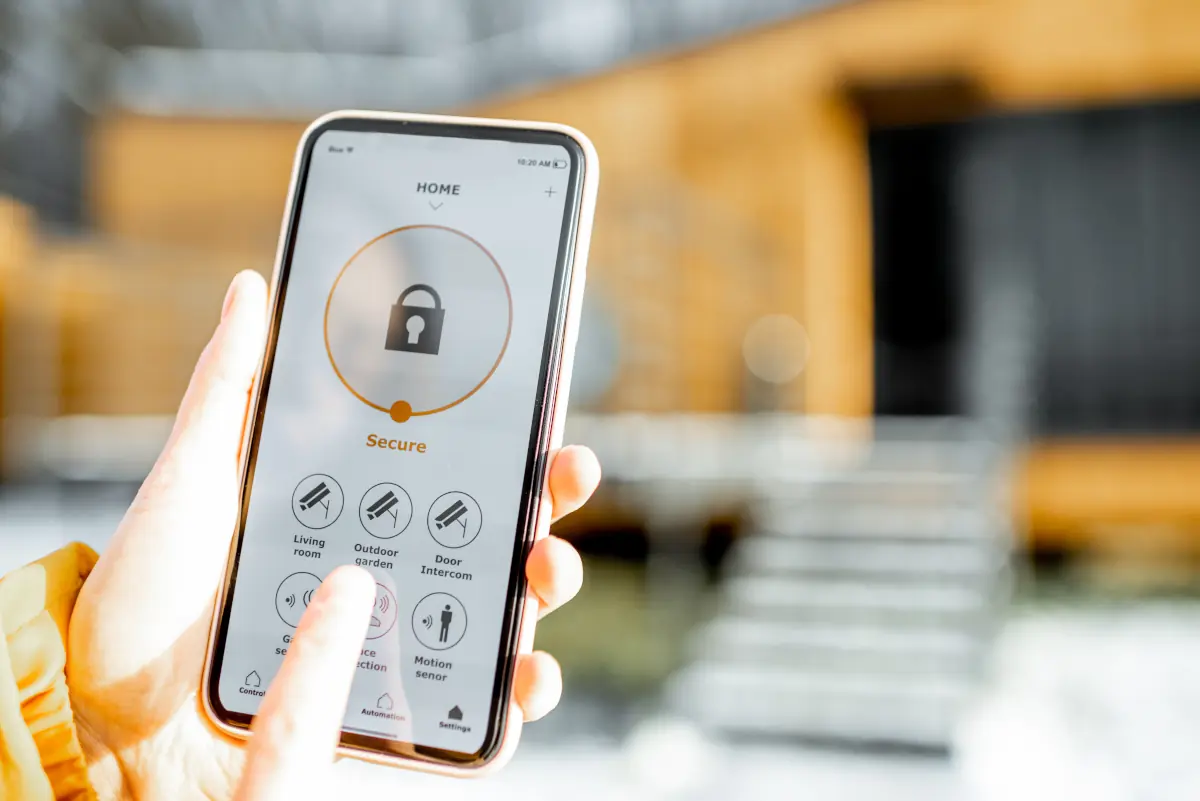
Because everything is managed via an online portal, facility managers can adjust user rights, revoke fobs, view live exit logs, and initiate lockdowns instantly from any phone or laptop.
2. Incorporating Cloud Intrusion Detection
Physical access control only solves part of the security puzzle. To build a complete, resilient security perimeter, many organizations integrate their entry doors with a cloud-based intrusion detection system.
When your doors, readers, and security sensors talk to the same cloud engine, you eliminate the operational gaps left by disjointed systems.
By linking access events with cloud intrusion detection, you can receive instant alerts on your phone if an unauthorized entry attempt occurs.
What an Integrated System Looks Like:
- Motion sensors, glass-break detectors, and door contacts work in unison.
- If a rear exit door is propped open after hours, the system flags the anomaly.
- Nearby surveillance cameras instantly pivot to capture the event, sending a live video clip straight to your management dashboard.
This proactive approach prevents false alarms and ensures that your security personnel or professional monitoring centers are only alerted when a genuine threat exists.
3. On-Premises vs. Cloud: What is the Real ROI?
The transition to cloud-managed systems represents a major shift from capital expenses (CapEx) to predictable operational expenses (OpEx). While traditional hardwired systems require massive upfront hardware purchases, the cloud simplifies your financial planning.
| Feature | On-Premises Legacy Systems | Cloud-Based Access Systems |
|---|---|---|
| Upfront Server Costs | High cost of purchasing and configuring dedicated local PCs. | None. Secure hosting is handled entirely off-site. |
| Software Updates | Manual installs, hourly IT fees, and frequent upgrade costs. | Automatic, over-the-air updates with zero downtime. |
| System Scalability | Limited by the physical capacity of your on-site hardware. | Virtually unlimited. Add doors and users as your team grows. |
| Remote Capabilities | Complex VPNs or dedicated networks are required. | Secure browser and mobile app access from anywhere. |
| System Redundancy | Vulnerable to local power outages and on-site hardware failures. | Built-in cloud redundancy ensures settings remain cached locally. |
By upgrading, you eliminate hidden technical support bills and hourly maintenance fees. If you manage multiple sites across Hamilton, London, or Guelph, you can manage all locations under a single online portal without buying separate servers for every building.
4. Industry Applications: Schools, Healthcare, and Businesses
Different facilities face different security threats. A cloud-managed approach allows you to scale and adapt your access rules to match the unique vulnerabilities of your sector.
Educational Spaces
Safety is the primary priority when designing cloud-based access control for schools and universities. Multi-campus academic facilities need to lock down buildings instantly during emergencies. Cloud networks allow administrators to initiate a complete lockdown across multiple properties with a single click on a smartphone, while automatically keeping local police departments informed.
Medical Facilities
We frequently design cloud-based access control for healthcare facilities, where patient safety and strict drug storage rules are paramount. Hospitals, clinics, and retirement homes use these platforms to restrict access to sensitive areas (such as pharmacies or archives) to authorized personnel only, while maintaining audit trails that are fully compliant with privacy and healthcare standards.
Corporate Operations
Finally, cloud-based access control for businesses provides the daily flexibility that modern office sites, retail centers, and warehouses need. If you hire a group of temporary contractors or freelancers, you can grant them access to specific rooms for exact dates and times. The system will automatically revoke their digital keys the moment their contract ends.
5. Finding the Best Software and Hardware Platforms
Choosing the right technology partners is critical to ensuring your system lasts for decades. To get the best results, you need a balance between secure, modern management programs and heavy-duty door hardware.
Software Integration
When evaluating your options, finding the best cloud-based access control software depends on your building’s complexity.
We highly recommend unified operations platforms like Genetec. Instead of forcing you to switch between different programs for your cameras, alarms, and card readers, Genetec integrates these components into a single, clean interface. This reduces training times for your team and streamlines your security operations.
Hardware Reliability
Software is only half the battle; you also need the best hardware for access control systems to ensure physical durability.
We utilize advanced electronic locking solutions from Salto. Known for their innovative data-on-card and wireless technology, Salto locks are excellent for both brand-new builds and retrofitting historic commercial properties with minimal drilling or disruption.
6. Step-by-Step: How to Implement Cloud-Based Access Control
If your organization is ready to upgrade, knowing how to implement cloud-based access control correctly is essential to avoid downtime.
At Knell’s Security Integration, we handle the entire process using our unique Total Opening Integration approach. Because we specialize in both mechanical door hardware and advanced digital security, we manage the entire life cycle of your openings.
Our Implementation Process:
- Consultation & Specification: Our specialists review your facility layouts to write architectural specifications (covering Divisions 8, 10, and 28) to ensure full compliance with building, fire, and accessibility codes.
- Physical Preparation: We repair, replace, or install the doors, frames, high-security mechanical locks (such as Medeco or Mul-T-Lock), and automatic door operators.
- Electronic Installation: Our certified technicians mount the readers, wire the controllers, and configure the cloud network.
- Onboarding & Training: We provide comprehensive training for your IT, HR, or facilities management teams to help them use the software easily.
- Ongoing Support: We conduct annual preventive maintenance visits to check for software updates, test backup batteries, and inspect physical door alignment.
Secure Your Building with Southwestern Ontario’s Local Experts
Why coordinate with three different companies when you can work with one? Knell’s handles the physical doors, the mechanical hardware, and the electronic cloud security in a single, stress-free package.
Our local technicians are frequently on-site helping clients in Kitchener, Waterloo, Cambridge, Guelph, Hamilton, London, Stratford, Woodstock, Brantford, Fergus, Elora, Elmira, Listowel, Goderich, Collingwood, New Hamburg, and Ayr.
Let us help you transition your facility to the cloud.
Contact Knell’s Security Integration:
- Direct Phone: 519.578.1000
- Email: Contact Our Security Integration Team
- Visit Our Showroom: 2090 Shirley Drive, Kitchener, ON
Our Past Projects & Proven Track Record
We have spent decades building security infrastructures for Southwestern Ontario’s most critical properties. Our experience includes comprehensive door-and-hardware and security-integration projects for:
- Educational Institutions: St. Andrew’s College, St. Anne’s School, and Wilfrid Laurier University.
- Healthcare & Community Spaces: Southwest Ontario Aboriginal Health Access Centre, Grandview Retirement Living, Trailside Medical Centre, oneRoof Youth Services, and the Canadian Mental Health Association (CMHA).
- Residential & Multi-Dwelling Properties: The Jake, Society145 (The Waterloo Residences), Lancaster Park Apartments, The Scott, Revive on Erb, VUE at Avalon, and Circa 1877.
- Commercial, Agricultural & Industrial Complexes: Accelerator Centre, Pfenning’s Organic Farms, B-W Feed & Seed, Linamar Innovation Hub, and Wallenstein Feed and Supply.
To read our full case studies and see how we solve physical security challenges for organizations like yours, visit our Knell’s Projects Page.